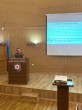
A scientific seminar on diseases affecting leguminous crops was held on 14 October 2026 at the Genetic Resources Institute of the Ministry of Science and Education of the Republic of Azerbaijan.
At the seminar, Orkhan Bayramli, a research fellow in the Department of Technical and Forage Crops, delivered a presentation entitled “Diseases of Leguminous Crops,” providing an overview of the principal diseases affecting these plants, their causes, mechanisms of spread, and effects on plant physiological and biochemical functions.
The presentation addressed fungal, bacterial, and viral diseases, with particular emphasis on root rot and wilt, and examined their detrimental effects on plant growth and productivity. The speaker also discussed the major factors contributing to the emergence and spread of these diseases, including genotypic susceptibility to pathogens, excessive humidity, unfavourable soil conditions, and the survival of pathogens in seeds, soil, and plant residues.
The importance of implementing integrated disease management strategies was highlighted, including the coordinated use of agronomic practices, chemical plant protection products, and biological control methods. The presentation further emphasised the significance of early disease detection, precise pathogen identification, and the assessment of plant phytosanitary status. In this context, the application of modern molecular genetic and genomic approaches, alongside conventional diagnostic methods, was discussed as an important avenue for improving disease diagnosis and management.
The seminar concluded with an exchange of views, a discussion of the issues addressed, and responses to questions raised by participants.